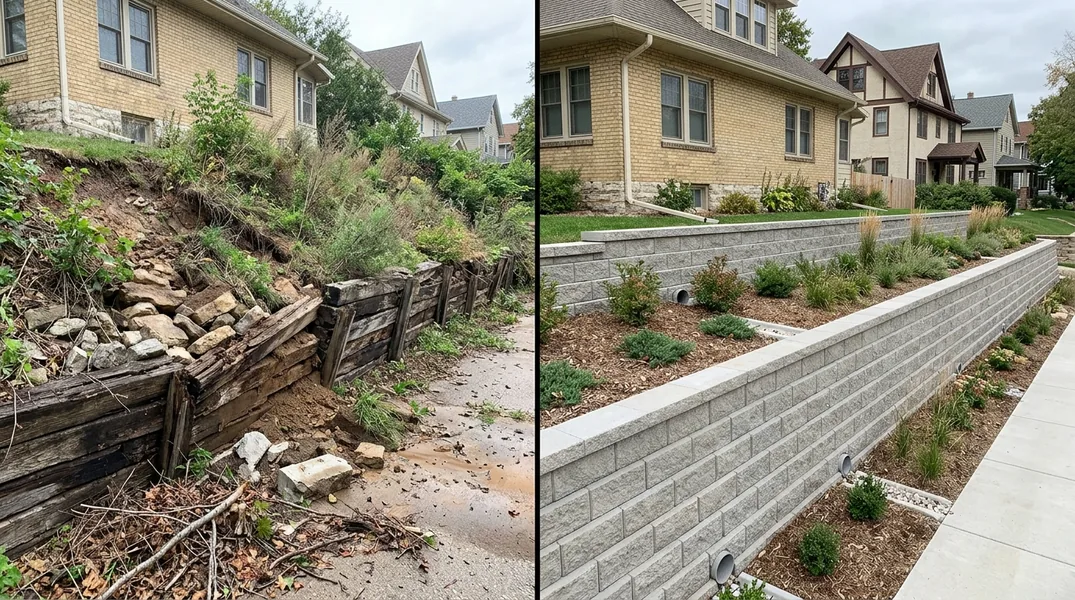
Why Milwaukee's Spring Thaw Is So Hard on Retaining Walls
Every year, homeowners across Milwaukee watch the snow melt and assume the worst of winter is over. For retaining walls, the real danger is just beginning. The spring thaw creates a unique combination of saturated soil, repeated freeze-thaw cycles, and rapidly changing groundwater levels that puts enormous stress on any wall holding back earth. A wall that looked perfectly fine in November can show cracking, leaning, or bulging by April.
The problem is that water is heavy. When the ground thaws, the soil behind your wall becomes saturated and expands. That water has to go somewhere, and if it cannot drain freely, it pushes against the back of the wall with tremendous force. This is the core reason so many walls fail in early spring, and it is why understanding retaining wall drainage is the single most important thing a homeowner can do to protect their investment.
Hydrostatic Pressure: The Invisible Force Behind Most Wall Failures
When water accumulates in the soil behind a retaining wall and cannot escape, it creates what engineers call hydrostatic pressure retaining wall failure conditions. In plain terms, the trapped water pushes outward against the wall like water pressing against a dam. Most residential retaining walls are not designed to resist that kind of force, because they assume water will drain away. When drainage is blocked by clay-heavy soil, compacted fill, or a missing drain system, the pressure builds until the wall cracks, tilts, or collapses.
Milwaukee's soils often contain significant clay, which drains very slowly. That means water can sit behind a wall for days or weeks after a heavy rain or snowmelt, steadily increasing the pressure. Homeowners sometimes notice a wall leaning outward at the top or see horizontal cracks forming, both classic signs of hydrostatic pressure at work. Ignoring these warning signs usually leads to expensive repairs later, which is why a proper Retaining Wall Repair assessment should always start with evaluating how water is moving behind the wall.
How Retaining Wall Drain Tile Prevents Costly Damage
The most effective defense against water damage is a properly designed retaining wall drain tile system. This typically involves a perforated pipe running along the base of the wall, surrounded by gravel and wrapped in filter fabric, that collects groundwater and carries it away from the wall before pressure can build. When installed correctly, drain tile gives water a clear path out instead of letting it accumulate. Many older walls in the area were built without any drain tile at all, which is a major reason they fail decades earlier than they should.
Drainage also includes surface management: grading the soil so water flows away from the wall, backfilling with free-draining gravel rather than clay, and sometimes adding a waterproof membrane or weep holes. If you are planning new construction, insist that Retaining Wall Installation includes a complete drainage plan, not just a stack of blocks. For existing walls, a drainage retrofit is often the smartest money you can spend, and it is far cheaper than rebuilding after a collapse. If you are unsure whether your wall has adequate drainage, a professional inspection can tell you quickly.
Frost Heave and Retaining Walls: What Milwaukee Homeowners Should Know
Frost heave retaining wall damage is another springtime threat that catches homeowners off guard. When moisture in the soil freezes, it expands and lifts the ground, and when it thaws, the soil settles unevenly. This cycle repeats many times over a Milwaukee winter. For a retaining wall, frost heave can push the wall forward, crack mortar joints, shift individual blocks or stones, and undermine the footing. Walls built with shallow footings or poor backfill are especially vulnerable.
The fix starts with depth and materials. Footings need to sit below the local frost line, and backfill should drain well so it holds less water to freeze in the first place. Concrete Retaining Walls and properly engineered segmental block walls handle freeze-thaw cycles far better than improvised timber or stacked stone. If your wall is already showing movement after a thaw, do not wait for the next freeze to make it worse. A Retaining Wall Replacement may be more economical than repeated patch repairs, especially when the original wall lacked proper drainage and frost protection.
Retaining Wall Drainage Near Me: When to Call a Professional
Some homeowners in Wauwatosa and West Allis can handle minor surface grading on their own, but drainage problems behind a retaining wall usually require professional evaluation. Signs that it is time to call a pro include a wall leaning more than a few inches, visible cracks that are widening, water pooling at the base of the wall after rain, soil settling behind the wall, or a wall that has already survived one collapse scare. These are not cosmetic issues, and delaying can turn a repair into a full replacement.
A professional assessment will look at soil type, water flow, footing depth, and the condition of any existing drain tile. In many cases, the right fix is a targeted drainage retrofit plus reinforcement, which preserves the wall you already have. In others, rebuilding with proper drainage and frost protection is the safer long-term choice. Either way, getting an expert opinion early saves money and stress. You can request a free estimate to find out exactly what your wall needs before the next storm season.
Protecting Your Wall Before the Next Spring Thaw
The best time to address retaining wall drainage is before the ground freezes again. Fall is ideal for inspecting and clearing drain lines, checking for cracks, and correcting grading so meltwater flows away from the wall rather than into the soil behind it. Homeowners in Brookfield and throughout the region should also keep an eye on downspouts and surface runoff, since roof water directed toward a wall can overwhelm even a good drain system. Small preventive steps now are far cheaper than emergency repairs in March.
If your wall is older, was built without drain tile, or has already shown signs of movement, schedule an inspection before winter sets in. Milwaukee Retaining Wall serves homeowners across the area with drainage evaluations, repairs, and new construction designed for local soil and weather conditions. Call (414) 250-0691 to discuss your wall, or ask about pricing for drainage upgrades and repairs. Protecting your wall from water and frost is the surest way to get decades of service instead of a costly collapse.
Looking for a professional retaining wall contractor in Milwaukee? Milwaukee Retaining Wall responds fast for all your retaining wall needs.
Get a Free QuoteOur services: Retaining Wall Installation · Retaining Wall Repair · Retaining Wall Replacement